Designing a scalable email templating system

Overview
Email is a key channel for Google Store (Google’s first-party retailer), but our template production process struggled to keep up as the business scaled. With little shared structure across transactional and marketing emails, each new template was effectively a bespoke build. Over time, this raised costs, slowed team velocity, and increased errors and rework.
I led a cross-functional redesign of our email creation system, aligning marketing, design, and engineering around a unified, component-based framework. We moved from one-off builds to reusable modules, which shortened campaign production time, reduced review burden, and established consistency across our library of 100+ email templates.

Standardizing structure
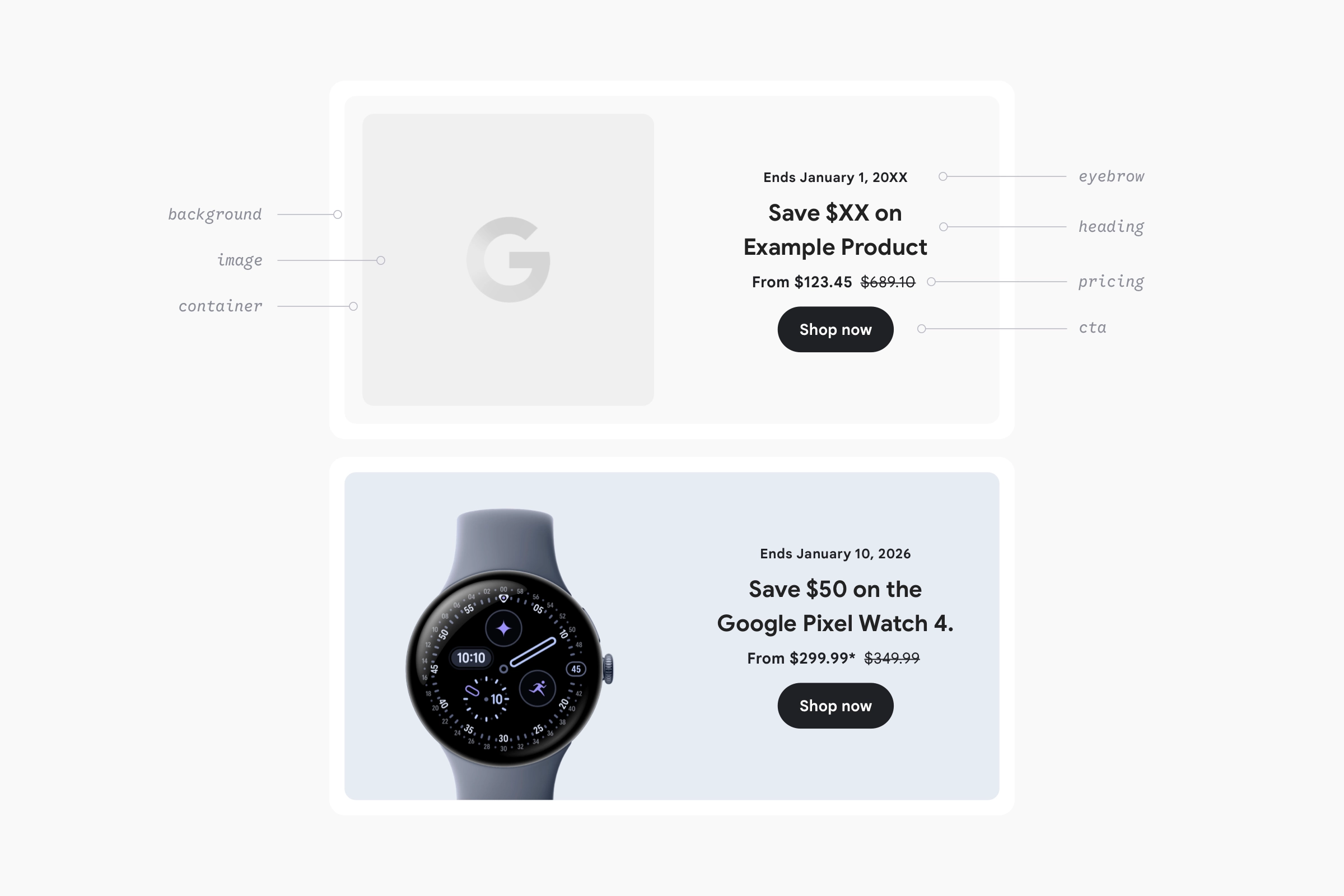
Emails tend to follow common layout patterns, but we lacked reusable design and code elements to represent them. Even templates that looked nearly identical were often built differently, making maintenance cumbersome and error-prone.
Partnering with a design agency, we defined an email design system and translated it into a set of reusable modules. Instead of hand-coding templates, authors now configure modules with guardrails that automatically enforce consistent layout and styling.
Supporting market expansion
As Google Store expanded into 30+ markets, localizing dynamic content needed to be consistent and reliable. Dates and prices were common pain points, since even small inconsistencies can introduce compliance risk and drive customer support calls.
I aligned UX writing, marketing, localization, and engineering around a single source of truth for date and currency formatting. We encoded these rules into the framework so correct formatting became automatic, eliminating an entire class of production errors.

Automating legal disclaimers
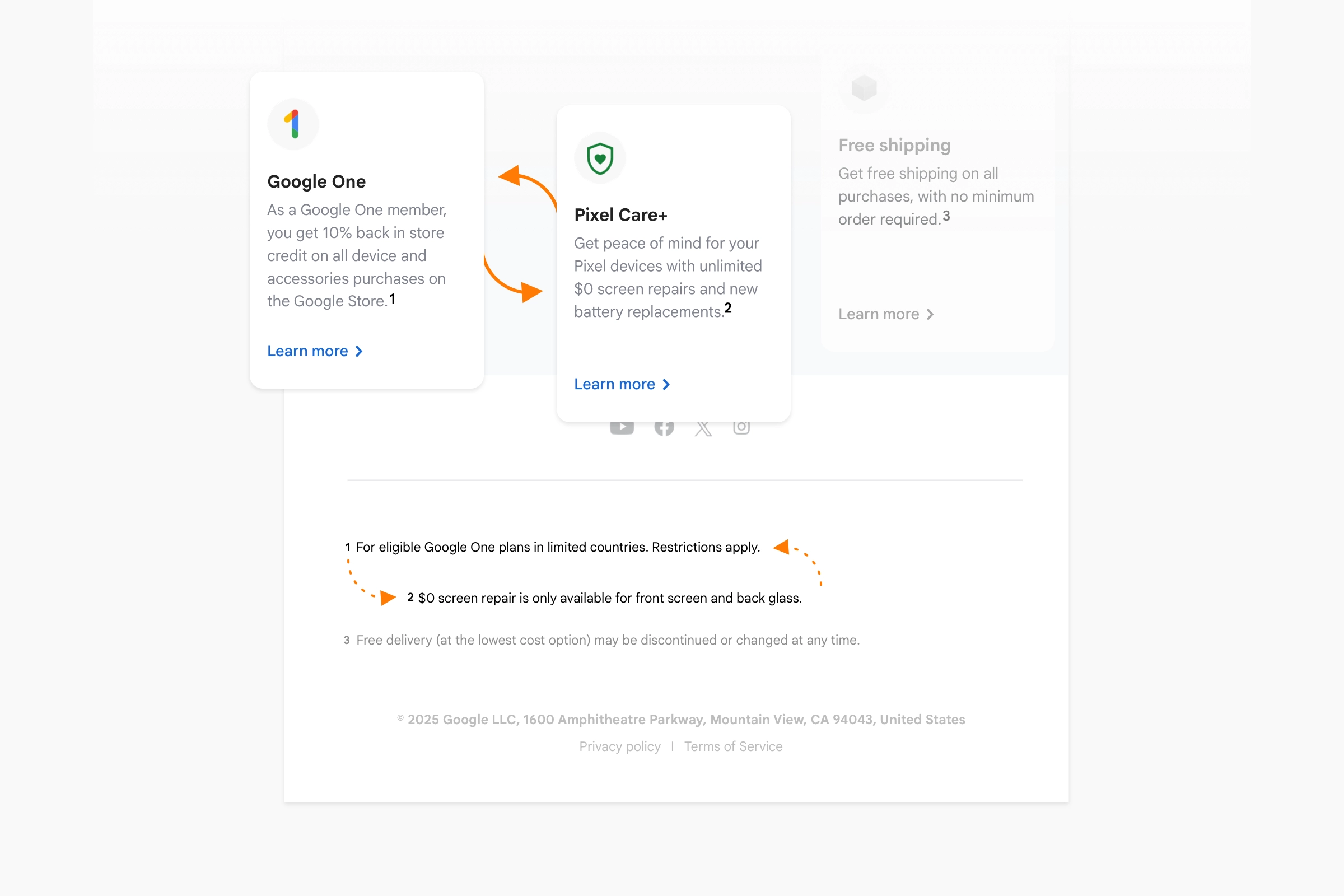
Disclaimers live in the footer, but they're triggered by specific claims in the body copy. Keeping those manually in sync was extremely fragile and QA-heavy, especially when promotion details change late in the production cycle.
Authors now reference disclaimers inline and the system handles superscripts, ordering, and deduplication in the footer automatically. Disclaimers stay correct even as content changes dynamically, avoiding a major source of manual QA effort and compliance risk.